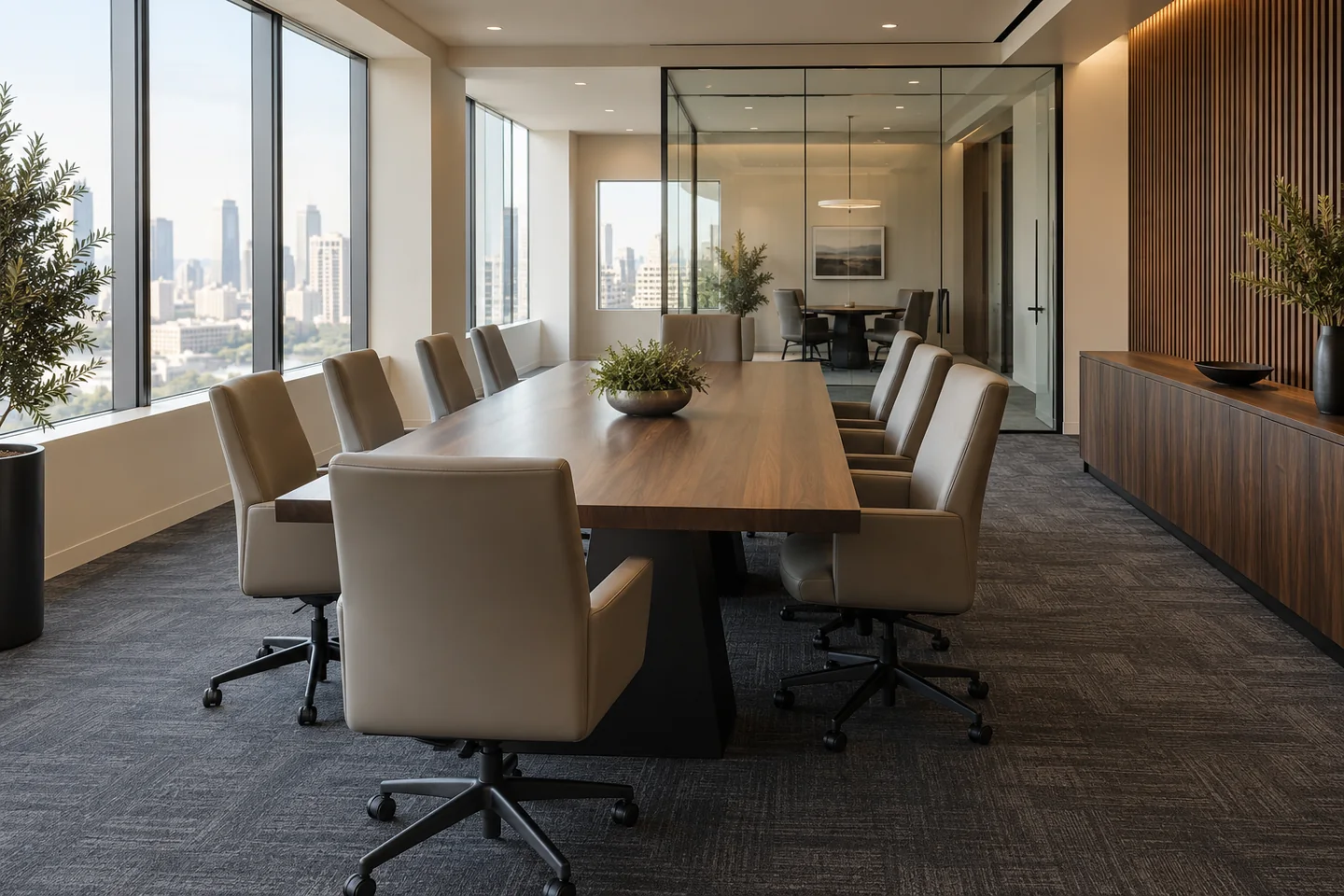
The Enterprise Furniture Landscape
Fortune 500 companies and large organizations spend millions annually on commercial furniture. Historically, these accounts were dominated by a handful of large national dealership groups — companies with 200+ employees, dedicated project management teams, and exclusive relationships with premium manufacturers.
That landscape has shifted. Post-COVID workplace transformations, remote/hybrid adoption, and accelerated refresh cycles have created opportunities for independent dealers who can move faster, price more competitively, and deliver personalized service that large dealership groups structurally struggle to match.
Large-Project RFP Template & Vendor Vetting Checklist
A practical PDF for facility managers, procurement officers, and corporate real estate teams: an 8-phase RFP structure, a 12-question dealer vetting scorecard, a budget worksheet for projects above 50 seats, and a cooperative contract eligibility quick-reference.
No spam. Unsubscribe anytime.
Why Enterprise Clients Work With Independent Dealers
1. Pricing Flexibility
Large dealership groups carry significant overhead — layers of management, showroom leases, corporate infrastructure. That overhead gets built into project pricing. Independent dealers operate with leaner cost structures, which translates directly into more competitive pricing for the client.
On a 200-seat project, the difference between a national contract house and a well-positioned independent dealer can be 10-25% on the same product specifications. At enterprise scale, that represents six figures in savings — real money that procurement teams notice.
2. Direct Relationships
Enterprise clients working with large dealership groups often interact with account managers who hand off to project managers who hand off to installation coordinators. The person who won the business is rarely the person managing day-to-day execution.
Independent dealers offer something different: the person who quoted your project is the person managing it. Questions get answered in hours, not days. Changes get implemented without bureaucratic approval chains. This matters on complex, multi-phase enterprise projects where scope changes are inevitable.
3. Manufacturer Agnosticism
Many large dealership groups have exclusive or primary relationships with a single manufacturer — they are a "Steelcase dealer" or a "Herman Miller dealer." This means their recommendations are inherently constrained by what their primary manufacturer offers.
Independent dealers can recommend across the entire manufacturer landscape. If HON workstations are the right product for your open plan but JSI casegoods are better for your executive offices, an independent dealer can spec both without conflict. This manufacturer-agnostic approach consistently produces better outcomes for the client.
4. Speed of Execution
Enterprise projects often operate under aggressive timelines — lease commencement dates, board-mandated move-in schedules, or rapid expansion needs. Large dealership groups have established processes that can be thorough but slow. Independent dealers can mobilize faster because decision-making authority sits with the people doing the work.
5. Pre-Owned and Blended Strategies
One of the most effective enterprise strategies is blending new and pre-owned furniture. A company furnishing a new 300-seat office can save 30-50% on their total furniture budget by using certified pre-owned Steelcase or Herman Miller seating alongside new mid-range desking and casegoods.
Large contract dealers rarely promote pre-owned strategies because their manufacturer relationships (and compensation structures) favor new product sales. Independent dealers who handle both new and pre-owned inventory can present the full range of options without bias.
How Enterprise Procurement Actually Works
The RFP Process
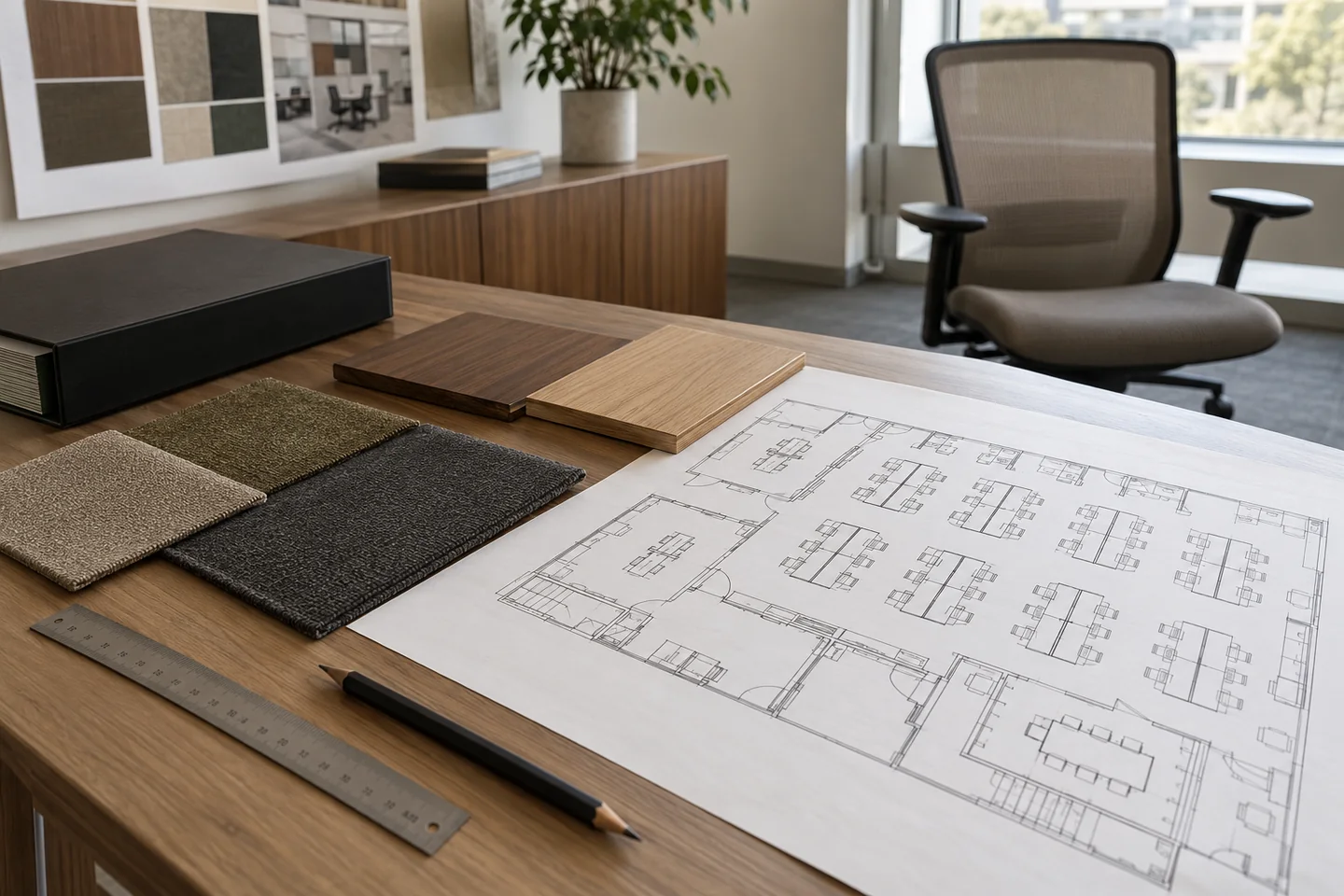
Most enterprise furniture projects begin with a Request for Proposal (RFP). Procurement teams issue specifications — headcount, space plans, product categories, timeline, budget parameters — and invite dealers to respond with product recommendations, pricing, and project plans.
Independent dealers can compete effectively in RFP processes by demonstrating product knowledge, competitive pricing, and references from comparable projects. The key is showing procurement that "independent" does not mean "small" — it means lean, responsive, and cost-effective.
Cooperative Purchasing
Enterprise clients — especially those in government, education, and healthcare — frequently use cooperative purchasing contracts (GSA, OMNIA Partners, Sourcewell, HGACBuy). These contracts provide pre-negotiated pricing that eliminates the need for competitive bidding on individual orders.
Independent dealers with access to cooperative contracts can offer enterprise clients the same pre-negotiated pricing as large national dealers — often with better service and faster turnaround.
Multi-Location Rollouts
Enterprise clients with offices in multiple cities need consistency across locations. This used to be a competitive advantage for national dealership groups with offices in every major market. Today, independent dealers leverage national installation networks and manufacturer-direct logistics to coordinate multi-city projects efficiently.
Make the standard repeatable.
One documented furniture standard.
Bring the product selections, finishes and purchasing requirements into a reference that every location can use.
Open the RFP BuilderWhat Enterprise Clients Should Look For in a Dealer
- Project references at scale — Ask for 3-5 references from projects of comparable size and complexity. Verify timeline adherence and punch-list resolution.
- Manufacturer breadth — A dealer who can spec across 5+ manufacturers gives you better options than one locked into a single brand.
- Installation capabilities — Understand whether the dealer uses in-house crews or subcontractors, and what their quality control process looks like.
- Financial stability — Enterprise projects often involve significant deposits and extended timelines. Ensure the dealer can handle the cash flow requirements.
- Warranty and post-installation support — Who handles warranty claims? How quickly are punch items resolved? What does ongoing service look like after the initial installation?
- Pre-owned expertise — If blending new and pre-owned is part of the strategy, the dealer should have established sourcing channels and quality control processes for pre-owned product.
The Bottom Line
Enterprise furniture procurement is not about finding the biggest dealer — it is about finding the right dealer. Independent dealers who combine manufacturer breadth, competitive pricing, and hands-on project management are winning enterprise accounts that would have defaulted to national contract houses a decade ago.
The shift is driven by results: enterprise clients who work with qualified independent dealers consistently report lower costs, faster execution, and more responsive service compared to their experiences with large national firms. The market is recognizing that leaner operations produce better outcomes when the people behind them have the expertise to deliver.