Receiving & Staging
Freight is received at your dock, checked against the order, and staged in a designated area. Damaged items are documented and reported immediately.
Commercial furniture installation requires experienced crews who know how to handle panel systems, height-adjustable desks, and modular workstations. Here's what the process involves from dock delivery to final walkthrough.
Prepare your site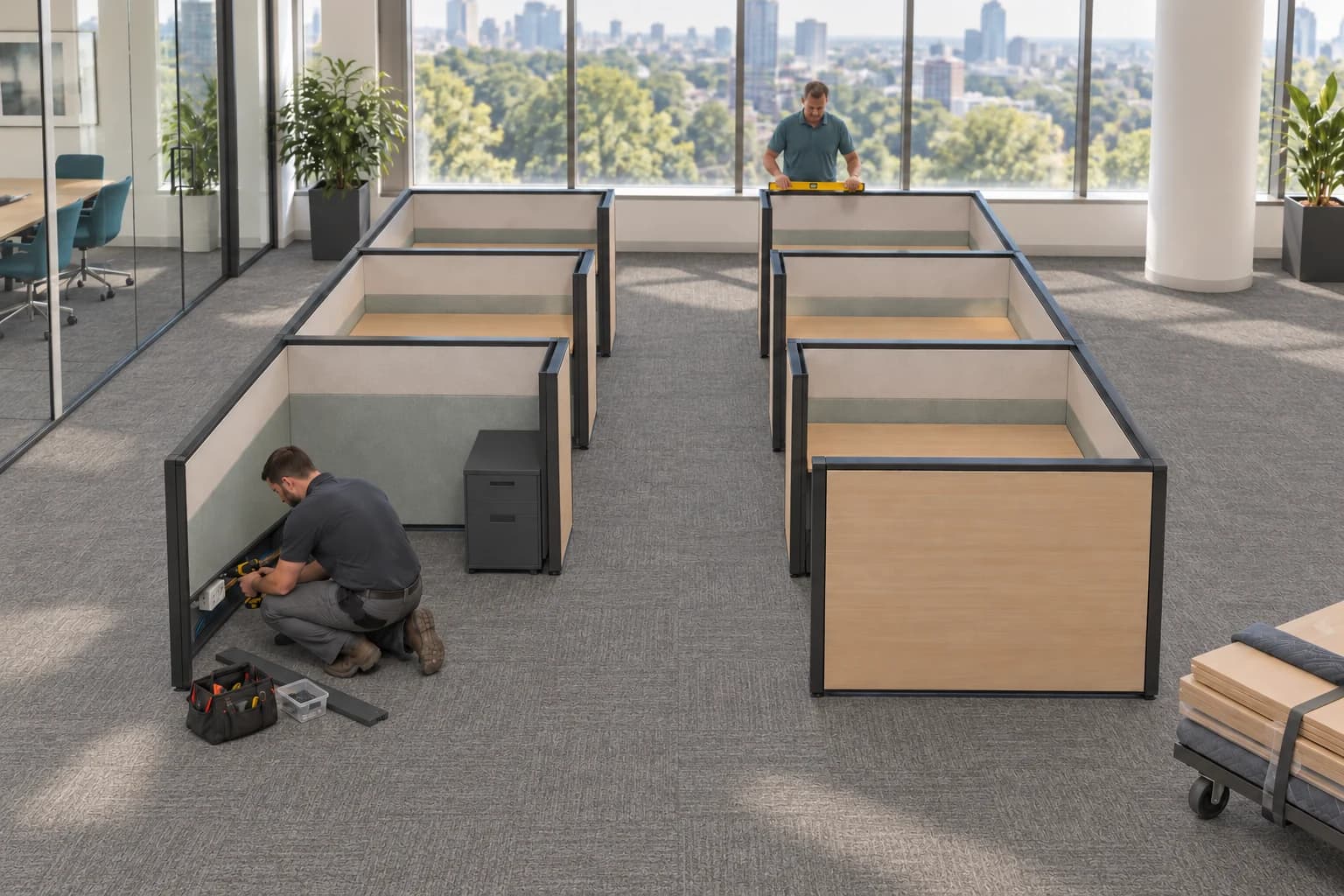
From the moment freight hits your dock to the final walkthrough, professional installation crews handle every step.
Freight is received at your dock, checked against the order, and staged in a designated area. Damaged items are documented and reported immediately.
Experienced crews assemble workstations, panel systems, desks, seating, and ancillary furniture per manufacturer specifications. Power and data connections are routed and tested.
Existing furniture is disassembled, relocated, and reassembled in new layouts. Panels are re-leveled, surfaces are cleaned, and everything is reconnected.
A final walkthrough with your project manager identifies any issues. Punch items are corrected on-site or scheduled for follow-up within 48 hours.
All packaging, cardboard, shrink wrap, and pallets are removed from the building. Your space is left clean and ready for occupancy.
Commercial furniture is not flat-pack consumer goods. Here is why professional installation is essential.
Improper installation can void manufacturer warranties. Professional installers follow exact specifications to keep your coverage intact.
Experienced crews install 3–5x faster than general contractors or in-house staff. A 50-station floor that takes a week with general labor takes 1–2 days with pros.
Commercial furniture is heavy and awkward. Professional crews carry liability insurance and are trained in safe handling of panel systems, glass, and ergonomic equipment.
Panel systems, height-adjustable desks, and modular furniture have specific assembly sequences. One wrong step can compromise structural integrity or function.
Crew lead reviews floor plans, staging areas, and building access with your team.
All product is received at the dock, checked against the order, and staged by zone.
Crews work zone-by-zone, assembling and placing furniture per the approved floor plan.
Power, data, height-adjustment, and all mechanisms are tested at every station.
Final walkthrough with your PM. Punch items are documented and resolved within 48 hours.
Timelines depend on product type, complexity, building access, and elevator availability. Installation teams typically provide a detailed schedule during planning.
A thorough site assessment is the single most important factor in preventing installation day problems. Experienced installation firms conduct a walkthrough — either in person or via detailed photos and floor plans — before providing a final quote. Here is what that assessment covers.
The crew lead identifies the receiving dock location, dock height (standard is 48" for semi-trailers), whether a dock leveler is available, and any weight restrictions on the loading ramp. If there is no dock, a liftgate truck must be scheduled. Buildings with shared docks require advance reservations — often 2-4 weeks ahead — through the property management office.
In multi-story buildings, freight elevator access is the bottleneck. The assessment confirms the elevator's interior dimensions (critical for long conference tables or tall storage towers), weight capacity (typically 4,000–6,000 lbs for commercial buildings), and operating hours. Most Class A office buildings require a formal elevator reservation through building management, and padding the elevator cab is often mandatory. Crews that skip this step risk damaging both the elevator and the furniture.
Nearly every commercial building requires a Certificate of Insurance from the installation company before granting access. The COI must name the building owner and management company as additional insured. It typically requires $1-2 million in general liability and $1 million in workers' compensation coverage. Allow 5-7 business days for the installation company's insurance provider to issue a building-specific COI — rushing this is a common cause of delayed install dates.
The assessment maps the route from dock to final location, noting any tight corners, narrow doorways (standard commercial doors are 36" but some older buildings have 32" openings), and floor protection requirements. Staging areas — where boxed product is held before assembly — need to be identified in advance. A typical 50-station install generates 3,000-5,000 square feet of boxed product that needs a staging zone.
For systems furniture (cubicles, benching with integrated power), the assessment confirms that electrical circuits and data drops are in place and energized. Steelcase, Haworth, and Herman Miller panel systems require specific electrical feeds — typically 20-amp dedicated circuits, one per every 8-12 workstations. If circuits are not ready, electricians must complete their work before furniture installation begins. The installation crew lead should coordinate directly with the electrical contractor to confirm circuit locations match the furniture plan.
Mark what you have confirmed for this visit.
Not all installation crews are equal. The difference between a skilled furniture installation team and general labor shows up immediately in quality, speed, and damage rates. Here are the qualifications that matter.
The best installation crews hold certifications from specific manufacturers. Steelcase has a Certified Installer program. Haworth and Herman Miller have similar dealer-installer requirements. Certified crews have completed manufacturer training on product-specific assembly sequences, wiring protocols, and quality standards. This matters most for complex systems furniture — Steelcase Answer, Haworth Compose, Herman Miller Canvas — where incorrect assembly can void the manufacturer warranty.
Systems furniture (panel-based workstations) is fundamentally different from freestanding furniture (desks, tables, chairs). A crew that excels at assembling Steelcase Montage panels may not have experience with Teknion modular walls or DIRTT prefab construction. Ask crews specifically what product lines they have installed in the past 12 months and request references from similar projects.
A standard crew consists of a crew lead (foreman) and 3-6 installers. For a 50-station workstation install, expect a crew of 4-6 working 1-2 days. The crew lead should be on-site the entire time — not splitting attention between multiple jobs. Larger projects (100+ stations) may require multiple crews working simultaneously on different zones of the floor.
Professional installation companies carry general liability ($1-2M), workers' compensation, and auto insurance. For government, healthcare, and financial services projects, background-checked crews may be required. Verify insurance before the crew arrives — not after. Request the COI directly and confirm it is current.
Different furniture categories require different skills, tools, and timelines. Understanding these differences helps set realistic expectations for installation day.
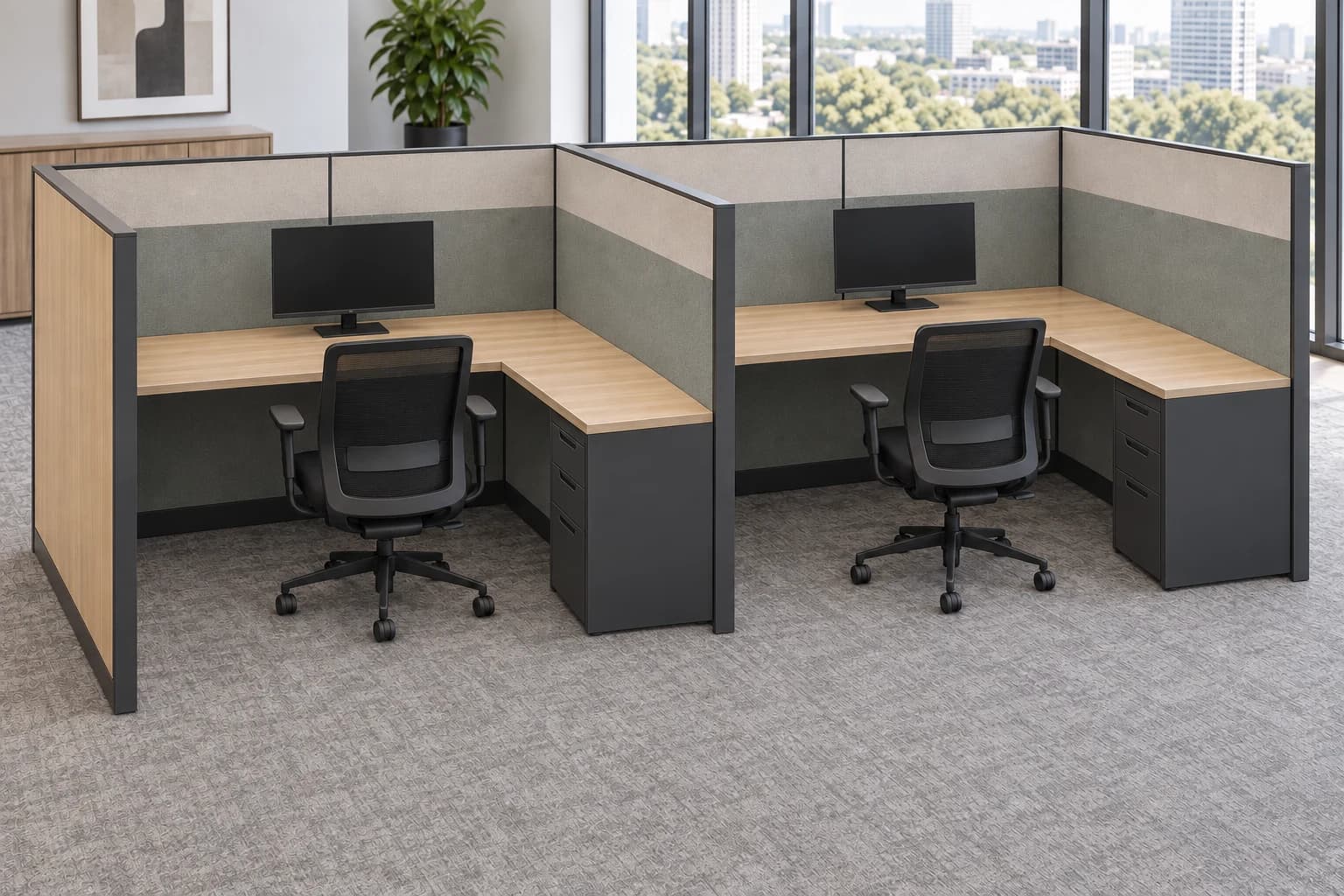 01 / PANELS & CONNECTIONS
Systems furniture — Steelcase Answer or Montage, Haworth Compose or Premise, Herman Miller Canvas or Ethospace, Knoll Dividends — is the most labor-intensive product to install. Panels must be leveled precisely (within 1/16" tolerance), connected with specific hardware, and wired for power and data. A single 6x8 workstation can have 25-40 individual components. Expect 45-90 minutes per station for experienced crews. The panels interlock in a specific sequence, and starting in the wrong corner of the floor means disassembling and starting over.
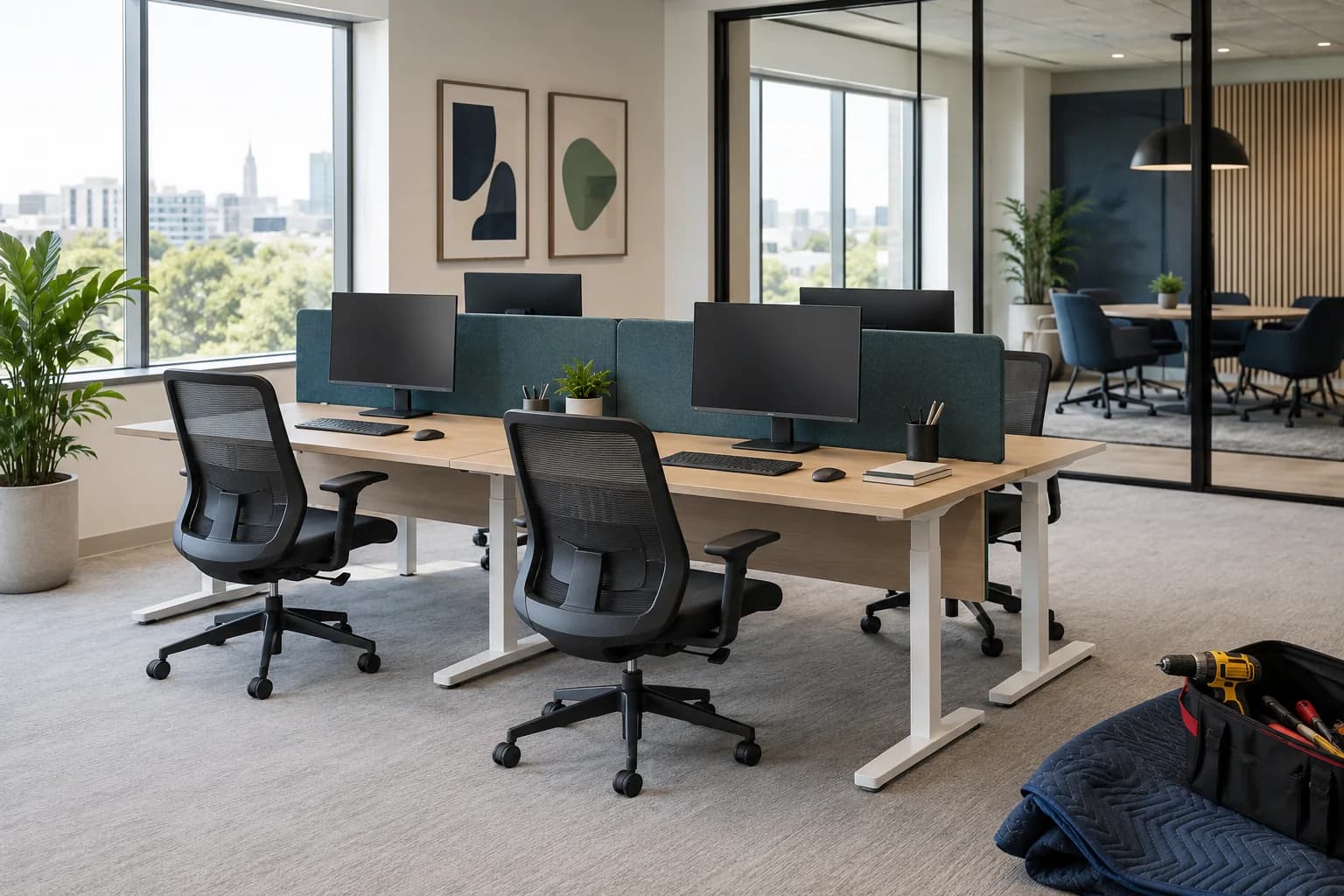 02 / SHARED WORKSTATIONS
Modern benching systems — Steelcase Ology, Herman Miller Layout Studio, Haworth Reside, Knoll Antenna — are faster to install than traditional panel systems but still require precision. Frames must be leveled, worksurfaces aligned, and cable management installed. Height-adjustable desks (sit-stand) add complexity: the electrical components, control boxes, and motors must be wired and programmed. Each desk needs to be tested through its full range of motion. Expect 20-40 minutes per position for benching, longer for electric sit-stand models.
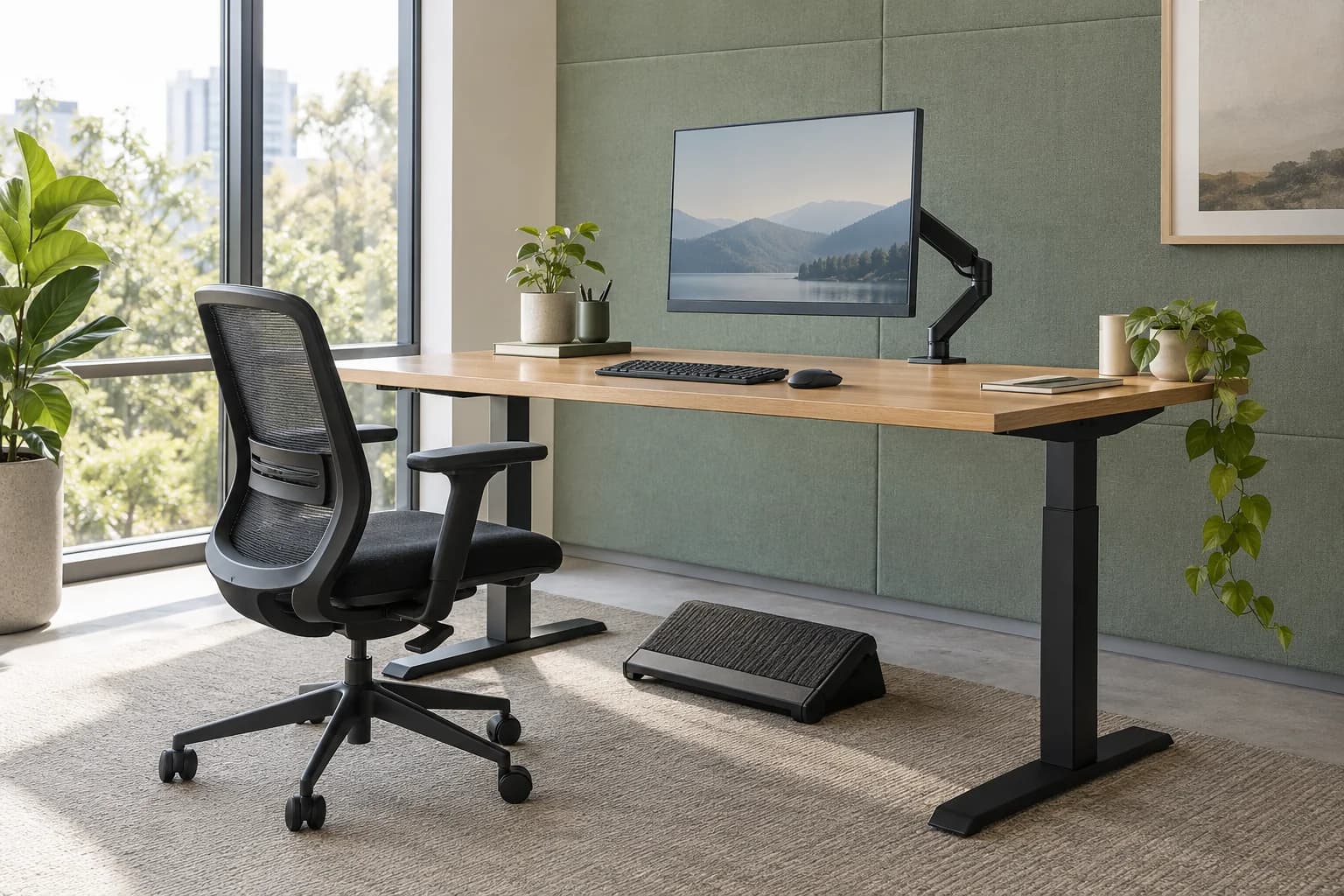 03 / INDIVIDUAL FURNITURE
Freestanding desks, conference tables, storage cabinets, and seating are the simplest category. Most arrive partially assembled. Conference tables are the exception — large tables from brands like Coalesse, OFS, or Nucraft may arrive in multiple sections that must be assembled and leveled on-site. Glass conference tables require extreme care during handling and often need suction-cup lifting tools. Expect 5-15 minutes per freestanding piece for standard items, 30-60 minutes for large conference tables.
 04 / ARCHITECTURAL SYSTEMS
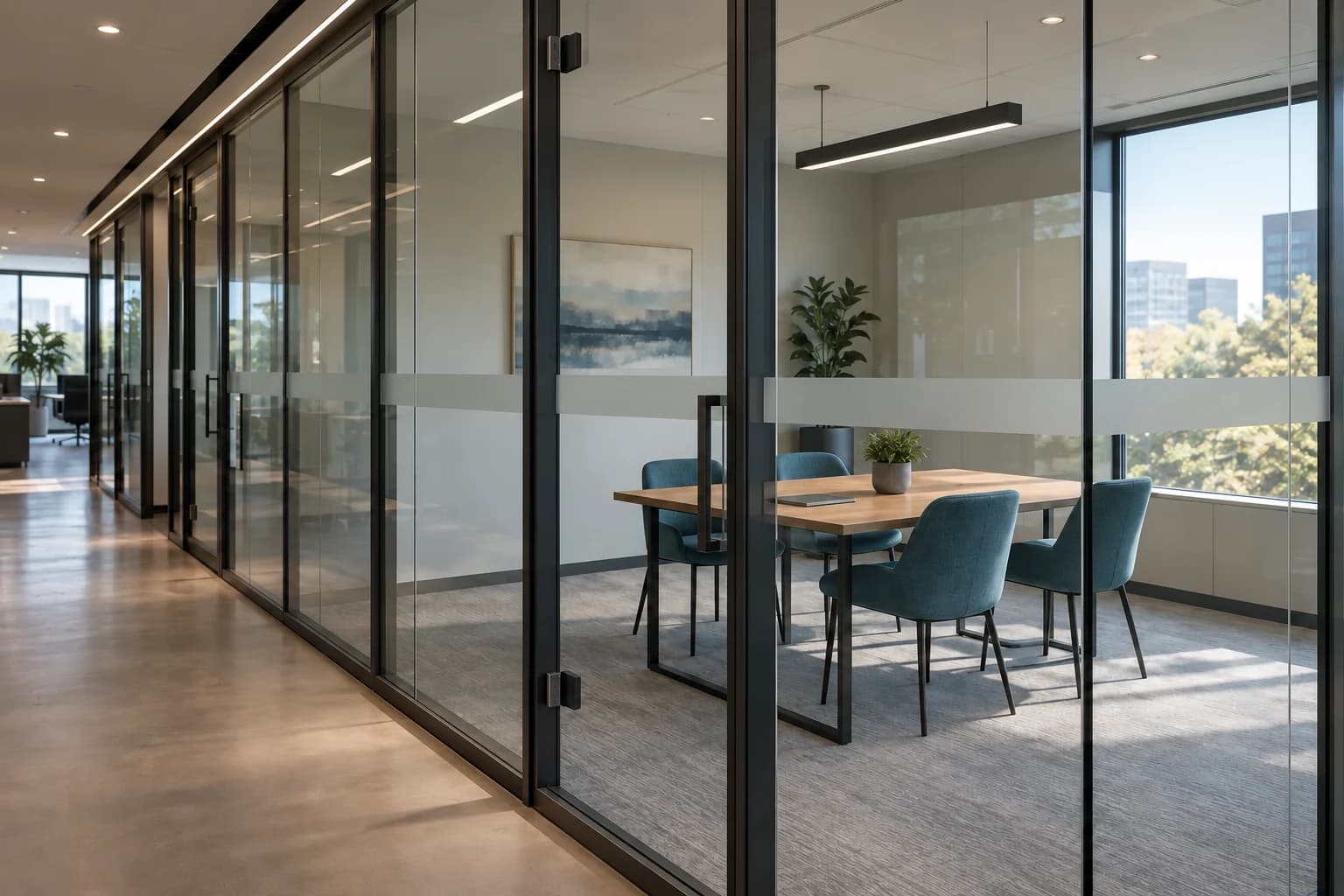
Demountable wall systems — DIRTT, Teknion Altos, Steelcase V.I.A., Haworth Enclose — require specialized crews, not general furniture installers. These products integrate with the building's ceiling grid, floor conditions, and sprinkler systems. Glass panels weigh 80-150 lbs each and require specific lifting and handling equipment. Installation is measured in days per office, not minutes per piece. A 10-office glass front installation typically takes 3-5 days with a crew of 4-6.
Quality control during installation prevents problems from compounding. A single panel installed out of level can cascade through an entire row of workstations. Here is how professional crews handle QC.
The crew lead should be checking alignment, leveling, and connections as each zone is completed — not waiting until the end. For panel systems, a laser level or spirit level should be used at every connection point. Power circuits should be tested as they are connected, not after the entire floor is wired. Worksurfaces should be checked for scratches, chips, or finish defects as they come out of packaging — damage claims must be filed within 48 hours of delivery for most manufacturers.
After installation is complete, the crew lead and the client's project manager walk the entire floor together. Every issue — misaligned panels, scratched surfaces, non-functional power outlets, wobbly chairs, missing components — is documented on a punch list with location, description, and photos. Standard practice is to resolve minor items on-site the same day and schedule a follow-up visit within 48-72 hours for items requiring replacement parts. A clean punch list closeout should be confirmed in writing.
If electrical circuits and data drops are not energized and tested before the furniture crew arrives, the install stalls. Electricians and furniture installers are different trades on different schedules. Confirm electrical completion at least 48 hours before the install date.
Crews that show up without a pre-install walkthrough inevitably hit surprises — the freight elevator is too small for the conference table, the dock is unavailable, or the floor plan does not match the actual space. Every site assessment that gets skipped adds cost and delays.
Partial deliveries mean partial installs. A workstation missing one panel or one worksurface cannot be completed. Verify with the dealer that all product has been received and checked in at the warehouse before scheduling the crew.
General movers and day laborers do not know how to assemble Steelcase panels or wire Haworth power bases. The result is slower installation, more damage, and assembly errors that void warranties. The cost difference between trained crews and general labor is typically $5-10 per station — a negligible premium for getting it done right.
Dragging heavy panels and worksurfaces across finished floors without Masonite runners or Ram Board damages carpet tile, LVT, and hardwood. Floor repair costs far exceed the cost of proper protection materials. Require floor protection as part of the installation scope of work.
Losing elevator access mid-install because another tenant reserved it stops the entire crew. For multi-day installs, confirm exclusive or priority freight elevator access for the full duration, including one extra day as a buffer.
A 100-station install generates 400-600 cubic feet of cardboard, shrink wrap, and pallet material. If dumpster space is not arranged in advance, packaging piles up in hallways and creates safety hazards. Include debris removal in the installation contract with a specified timeline for removal.
Describe your project and get connected with professional installation crews who can provide a detailed proposal — crew size, timeline, and cost.
Furniture images are illustrative AI-generated scenes.